
Why You Shut Down, Chase, Explode, or Withdraw During Conflict
The argument is rarely just about the dishes, the tone, the text, or the timing. Conflict often activates old nervous system patterns connected to safety, connection, abandonment, overwhelm, control, shame, or fear of being misunderstood. This post explores why some people shut down, chase, explode, withdraw, overexplain, defend, or try to fix things immediately during conflict, and how these patterns often began as protection. For cycle breakers, understanding the pattern is the first step toward returning to relationship differently.

Why Parenting Triggers Feel So Big When You Have a Trauma History
Parenting triggers can feel confusing, especially when your reaction feels bigger than the moment in front of you. For cycle breaker parents, a child’s crying, defiance, neediness, disrespect, emotional intensity, or independence can activate old nervous system alarms connected to trauma history, family of origin wounds, shame, helplessness, or fear of repeating the cycle. This post explores why parenting triggers feel so big, why intelligent or emotionally aware children are still developing, how depletion lowers capacity, and why repair, accountability, and realistic expectations matter.

When Being “Good” Becomes Survival
What if being “good” was never just about being kind, helpful, or responsible? For many cycle breakers, people-pleasing, perfectionism, and over functioning began as survival responses. They may have helped create safety, connection, predictability, or control, but over time, they can become patterns that keep you stuck. This post explores how being good can become a trauma response, why resentment and anger often follow, and how healing begins with one pause, one honest check-in, and one different choice.

When Survival Becomes Personality: How Trauma Patterns Shape Identity
What if the thing you call your personality was once a survival strategy? This post explores how patterns like people-pleasing, hyper-independence, perfectionism, caretaking, anger, control, and overfunctioning can begin as protection and later become part of identity. For cycle breakers, healing means learning to honor the ways your body helped you survive while gently asking what no longer needs to lead.

How Nervous System Healing Helps Cycle Breakers Choose Something Different
Cycle breaking is not about perfection. It is about learning how to notice activation sooner, stay rooted in the present, and create enough space to choose something different. This post explores how nervous system healing helps the body update old trauma maps, build capacity, and move beyond patterns like people-pleasing, guilt, shame, hypervigilance, and overfunctioning.

Why Insight Alone Is Not Always Enough to Change Trauma Patterns
Have you ever understood exactly where a pattern came from, but still found yourself repeating it? This post explores why insight alone is not always enough to change trauma patterns, how the nervous system can hijack the rational brain, and why cycle breaking requires compassion, accountability, regulation, and embodied practice.

For the Cycle Breakers: What It Means to Stop Repeating What Hurt You
Cycle breaking is not about blame. It is about noticing inherited trauma patterns, understanding how they live in the nervous system, and learning how to choose something different in your body, relationships, parenting, and life.
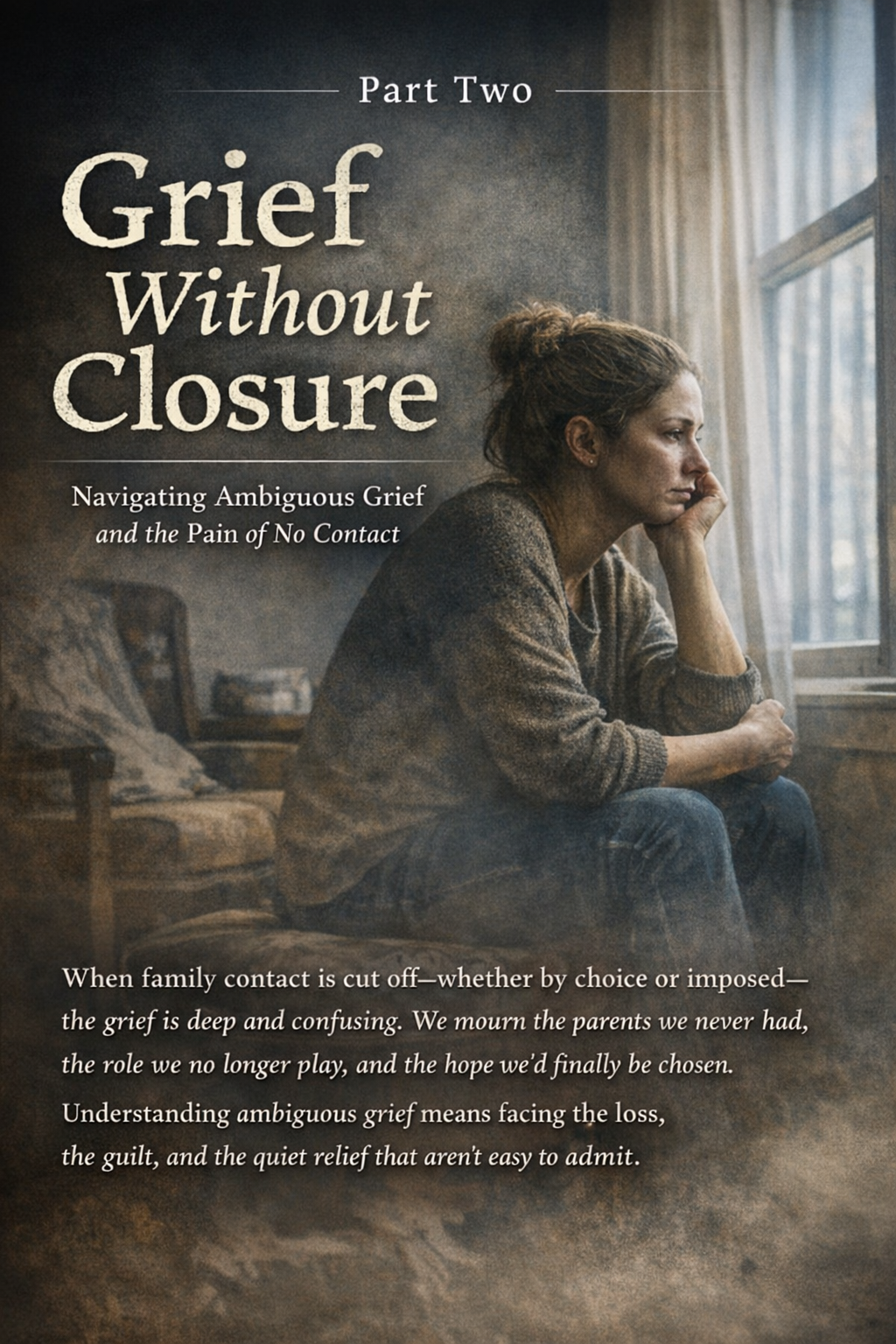
Part Two: Grief Without Closure — Understanding Ambiguous Grief
What do you call grief when no one has died, but the relationship no longer exists?
This post explores ambiguous grief in family estrangement, whether no-contact is chosen or imposed. We unpack the guilt, shame, relief, and identity loss that surface when stepping out of dysfunction, and why grief without closure deserves language and compassion.

Part One: The Childhood We Were Promised, and the One We Lived
We’re taught that family should be forgiven no matter the harm, that blood excuses everything, and that love means endurance. But for many people, childhood was not safe, and forgiveness was demanded without accountability or change. This piece explores the grief, nervous system impact, and boundary confusion that grow out of family-of-origin trauma—and why telling the truth is often the first act of healing.

Part 3 | Measuring Change: Intensives vs Traditional Therapy
Healing isn’t just about “feeling better”—it’s about noticing real, measurable change. In this post, we explore how therapy intensives create faster, deeper results than weekly sessions and how progress is tracked both scientifically and personally. From fewer panic attacks and calmer mornings to lowered SUDs and improved self-belief, you’ll see how the mind and body show healing in ways you can actually feel—and measure.

Part 2 | Inside the Intensive: Modalities That Make Healing Stick
Not all therapy intensives are created equal—and that’s a good thing.
Each person’s nervous system, history, and healing goals are unique, which is why I tailor every intensive to the individual.
At Trauma Wise Healing, intensives weave together bottom-up approaches (that calm the body and regulate the nervous system) and top-down approaches (that bring clarity, understanding, and integration). Before beginning, I use a blend of conversation and clinical screeners—like the PHQ-15, PCL-5, GAD-7, DES-II, ACE, MID v6, and SDQ-20—to get a clear picture of what your brain and body need.
From there, we create a plan that combines evidence-based modalities like EMDR, ART, Somatic Therapy, Parts Work, and CBT/DBT skills—so your brain and body can finally work with each other, not against each other.
When the nervous system feels safe, healing can finally stick.