Adult Children & Parent Therapy
You're both adults now. But sometimes the relationship still feels stuck in the past.
The relationship between a parent and an adult child is supposed to change over time. But that transition isn't always easy.
Roles shift. Boundaries change. Adult children build lives, relationships, and families of their own. Parents have to figure out how to stay connected without continuing to relate to their children in the same ways they did when they were younger.
Sometimes that transition happens naturally.
Sometimes it doesn't.
Old hurts resurface. Boundaries feel like rejection. Concerns feel like criticism. Conversations about the past turn into arguments about whose memory is accurate. A parent may feel confused about why everything seems to come back to what they got wrong. An adult child may feel exhausted from trying to explain why something still hurts.
You don't have to agree about the past before you can begin understanding what's happening between you now.
When You Both Have a Different Version of the Relationship
Parents and adult children often come to therapy because they feel trapped inside completely different versions of the same relationship.
One person remembers love and sacrifice.
The other remembers hurt, pressure, criticism, distance, or not feeling understood.
A parent may hear, "Something from my childhood still affects me," and experience that as a judgment of everything they did as a parent.
An adult child may hear, "I did the best I could," and experience that as another reason their pain cannot be acknowledged.
Both experiences can exist at the same time.
Therapy gives us room to slow that down and understand why each person is trying to communicate beneath the defensiveness, hurt, anger, or withdrawal.
We don't have to agree on every detail of the past to begin understanding how those experiences continue to shape the relationship today.

What Brings Parents & Adult Children to Therapy?
You may be recognizing that something in your relationship isn't working the way either of you would like.
Sometimes there's been a specific conflict or rupture. Other times, it's years of smaller hurts, misunderstandings, and conversations that never seem to go anywhere.
Families come to this work for many reasons, including:
Longstanding conflict or resentment
Childhood experiences that still affect the relationship
Changing boundaries and expectations
Feeling criticized, dismissed, controlled, or misunderstood
Differences involving partners, parenting, or grandchildren
Old family roles that no longer fit
Increasing emotional distance or limited contact
Reconnecting after estrangement
Trying to prevent estrangement before it happens
You don't have to agree on exactly what the problem is before coming to therapy.
Sometimes, understanding why you see the problem so differently is where the work begins.
There Doesn't Have to Be a Villain
I don't begin this work assuming that parents are entitled to relationships with their adult children.
I also don't assume that distance or estrangement is automatically the healthiest response to relational pain.
Adult children should not have to ignore harmful patterns to preserve a relationship. Parents should not be reduced to a list of mistakes without room for context, accountability, growth, and change.
My approach intentionally takes a middle path.
Rather than deciding who is right, or who is wrong, I work to understand what has happened between you, what responsibility belongs to each person, and what would actually need to change for the relationship to become healthier.
Sometimes that leads to reconciliation. Sometimes it leads to a different understanding of what a relationship can realistically look like.
And sometimes meaningful change begins with recognizing that love and good intentions alone aren't enough to repair what has happened.
How We Begin
I begin by meeting individually with each participating family member before we begin working together.
These initial meetings give everyone an opportunity to share their experiences, important family history, and hopes for the relationship without immediately having to defend their perspective or manage someone else's reaction.
They also allow me to better understand the dynamics between family members and assess whether moving into joint sessions is appropriate.
When we begin meeting together, we typically use 90-minute sessions. This gives us enough time to work through difficult conversations, recognize familiar patterns, and explore different ways of relating without feeling rushed.
My approach draws from attachment, trauma, family systems, and relational therapy, along with specialized training in estrangement and reconciliation between parents and their adult children.
The goal isn't to force agreement or decide whose version of the past is correct.
It's to create enough understanding, accountability, and emotional safety for something different to become possible.
FAQ’s
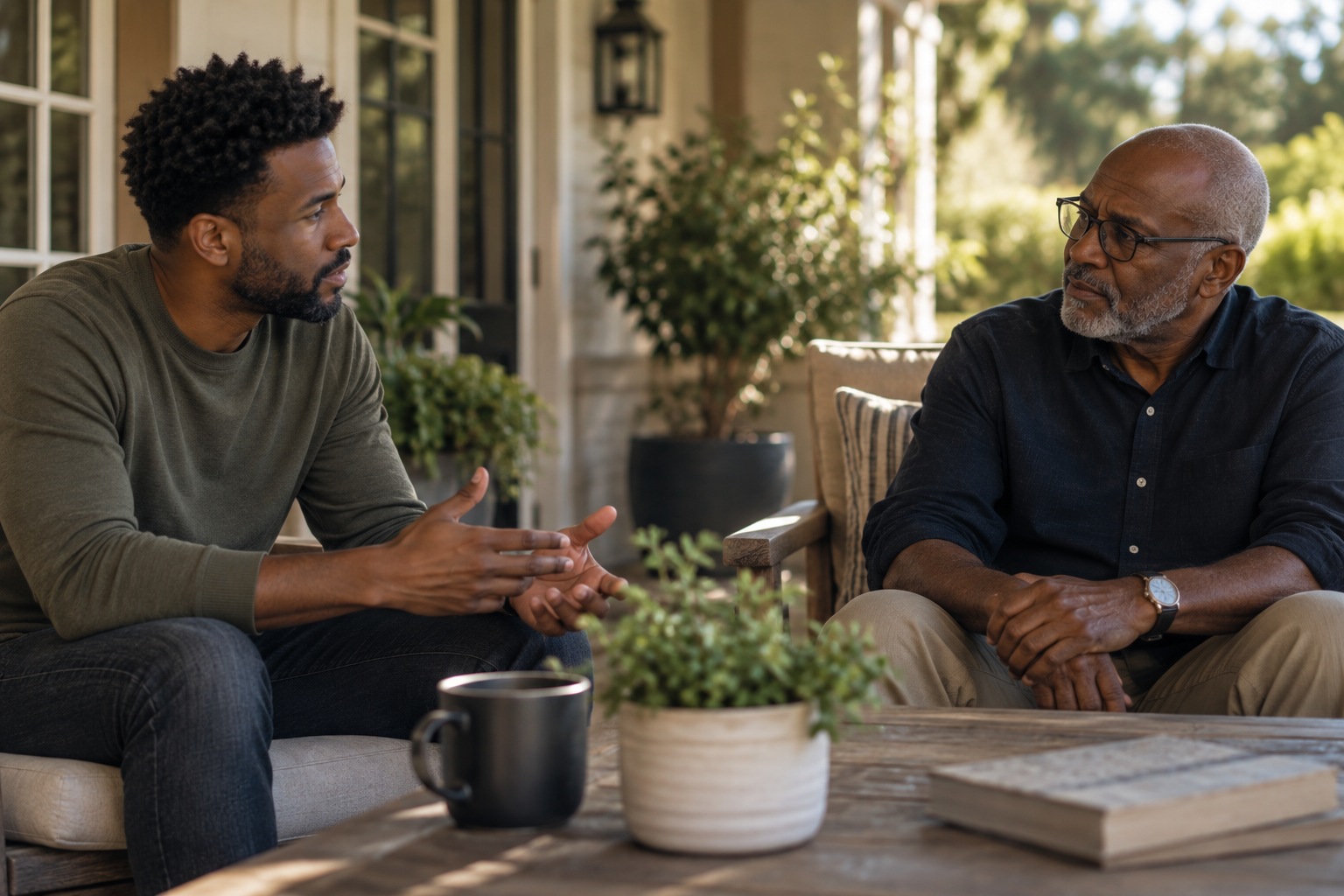
When Estrangement Is Already Part of the Story
Sometimes families reach out because the relationship has become strained. Other times, contact has already become limited or stopped altogether.
Estrangement rarely happens in a vacuum. There may be years of unresolved hurt, repeated conflict, changing expectations, or attempts to communicate that have left one or both people feeling unheard.
For some adult children, distance has felt necessary to protect their emotional well-being or establish boundaries that weren't being respected.
For some parents, that same distance has been confusing, painful, or difficult to understand, particularly when their memories of the relationship are very different.
Both experiences deserve to be understood. That doesn't mean all behaviors are equally harmful or that everyone shares the same responsibility for what happened.
When reconciliation is being considered, therapy can help family members explore what contributed to the rupture, what each person would need to feel safe enough to engage, and whether meaningful repair is possible.
Reconciliation isn't something I assume should happen simply because you're family.
Sometimes the work involves rebuilding a relationship. Sometimes it involves understanding why repair isn't possible right now. And sometimes it begins with one person trying to make sense of what happened.
For families navigating estrangement or considering reconciliation, I offer a more specialized approach to this work.
Why I Specialize in This Work
There's something particularly complicated about relationships between parents and their adult children.
These are relationships shaped by years, sometimes decades, of shared history. There are memories, expectations, roles, and experiences that don't simply disappear when a child becomes an adult.
A parent may still see the child they raised, while an adult child is trying to be recognized as the person they've become.
And when the relationship becomes strained, both may find themselves responding to years of accumulated experiences rather than just the conversation happening in front of them.
This is work I've intentionally chosen to specialize in because I believe there needs to be more room for thoughtful, nuanced conversations about adult family relationships.
My approach draws from attachment theory, family systems, trauma-informed care, and specialized training in family estrangement and reconciliation, including training with Dr. Joshua Coleman.
I don't believe every estrangement is the result of a harmful parent. I also don't believe every adult child who creates distance is unreasonable or unwilling to work through conflict.
Families are more complicated than those explanations allow.
What interests me is helping people understand how they arrived where they are, what responsibility and meaningful change might look like, and whether a healthier relationship is possible.
Not every relationship can or should return to what it was. But that doesn't mean there isn't meaningful work to be done.
-
Potentially, yes. It's common for family members to have different understandings of the relationship and whether something needs to change.
We don't need everyone to agree about the problem before beginning therapy. However, each person does need to be willing to participate in the process.
If the other person isn't interested in attending, individual therapy may still be helpful for understanding your experiences, navigating boundaries, and deciding how you want to move forward.
-
That's something I encounter frequently in work between parents and adult children.
A parent may remember doing everything they could with the resources they had, while their adult child remembers experiences that were painful or confusing.
Therapy isn't about requiring one person to adopt the other's version of the past. It's about understanding how those experiences have shaped the relationship, acknowledging harm where it occurred, and exploring what meaningful change would require.
-
My role isn't to act as a judge or determine who wins an argument.
That doesn't mean avoiding accountability. There may be behaviors, boundaries, or patterns that need to be addressed directly.
The goal is to help each person better understand the relationship and identify what needs to change, rather than simply proving that one person's perspective is correct.
-
No. Sometimes families begin therapy because they want to repair a relationship. Others aren't sure whether closeness is possible or even desirable.
We can begin by understanding what has happened and what each person needs, without committing to a particular outcome.
-
Potentially, yes. I provide telehealth services across multiple states, so family members don't necessarily need to be in the same location.
Each participant must be physically located in a jurisdiction where I'm legally authorized to provide services at the time of the appointment. We can review everyone's locations during the consultation.
-
The fee is based on my time rather than the number of participants.
Sessions are $235 for 60 minutes or $352.50 for 90 minutes. This includes the initial individual assessments conducted as part of family therapy.
Family members can decide how they would like to divide the cost.
Investment
Therapy for adult children and parents is billed based on the length of the session, not the number of people participating.
Session Rates
60-minute session: $235
90-minute session: $352.50
These rates apply to both the initial individual assessments and our joint family sessions.
Getting Started
I typically begin with a 90-minute individual assessment for each participating family member. Once those meetings are complete, we determine whether moving into joint sessions is appropriate.
Most families begin with 90-minute joint sessions, although we can discuss transitioning to 60-minute appointments as our work progresses.
Payment and Insurance
Trauma Wise Healing is a private-pay practice and does not accept insurance.
Family members are welcome to decide how they would like to divide the cost. One person may cover the full session fee, or participants may share the expense in whatever arrangement works for them.
ADULT CHILDREN & PARENT THERAPY
Your Relationship Can Change,
Even When Your History Can't.
You can't go back and change everything that happened. And you may not agree on how the past should be understood.
But you can begin exploring how those experiences have shaped your relationship, what needs to change, and whether there's a healthier way to move forward.
You don't have to have all the answers before starting.