
Why Parenting Triggers Feel So Big When You Have a Trauma History
Parenting triggers can feel confusing, especially when your reaction feels bigger than the moment in front of you. For cycle breaker parents, a child’s crying, defiance, neediness, disrespect, emotional intensity, or independence can activate old nervous system alarms connected to trauma history, family of origin wounds, shame, helplessness, or fear of repeating the cycle. This post explores why parenting triggers feel so big, why intelligent or emotionally aware children are still developing, how depletion lowers capacity, and why repair, accountability, and realistic expectations matter.
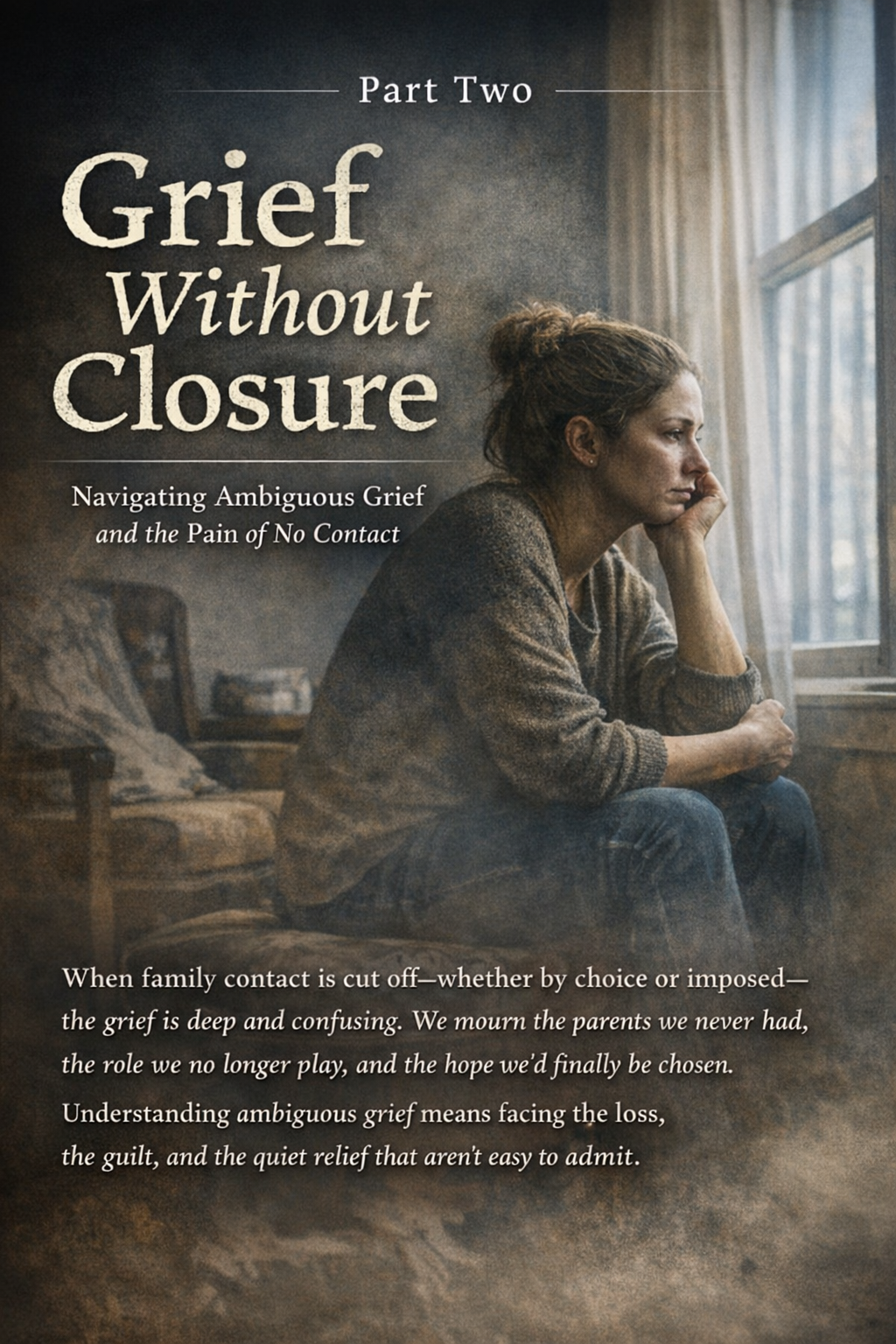
Part Two: Grief Without Closure — Understanding Ambiguous Grief
What do you call grief when no one has died, but the relationship no longer exists?
This post explores ambiguous grief in family estrangement, whether no-contact is chosen or imposed. We unpack the guilt, shame, relief, and identity loss that surface when stepping out of dysfunction, and why grief without closure deserves language and compassion.

Part One: The Childhood We Were Promised, and the One We Lived
We’re taught that family should be forgiven no matter the harm, that blood excuses everything, and that love means endurance. But for many people, childhood was not safe, and forgiveness was demanded without accountability or change. This piece explores the grief, nervous system impact, and boundary confusion that grow out of family-of-origin trauma—and why telling the truth is often the first act of healing.